

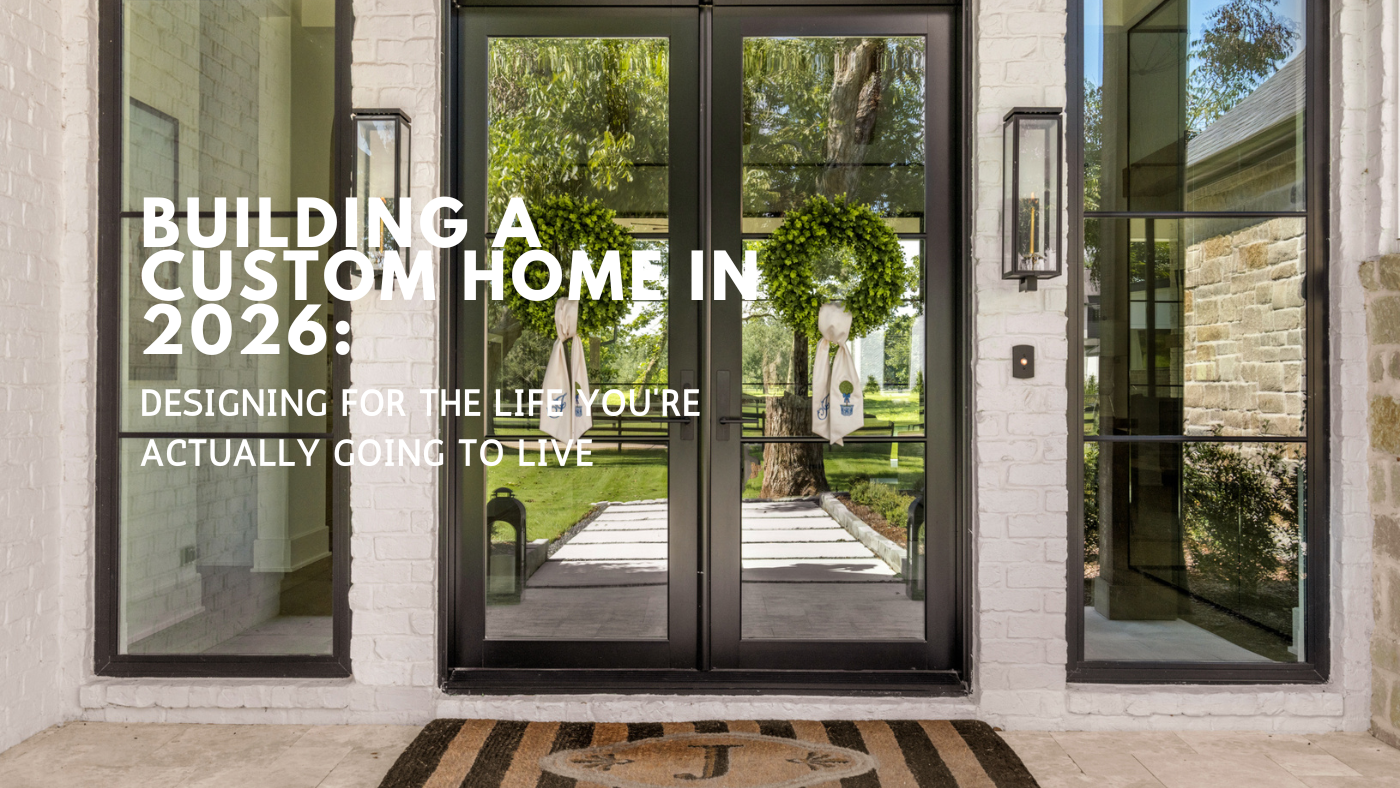
Building a Custom Home in 2026: Designing for the Life You’re Actually Going to Live
If the last few years have taught homeowners anything, it’s this: the way we live is still evolving. Homes are no longer just where we land at the end of the day. They’re where work happens, where holidays stretch longer, where routines change, and where life has learned to be more flexible than any of us expected.
As we look toward 2026, custom home building is less about chasing trends and more about creating spaces that truly support how people live now and how they expect to live next. At Fairmont, we’re seeing a clear shift in what future homeowners value, not just in finishes or square footage, but in intention.
The Custom Home of 2026 Starts With Lifestyle, Not Layout
In years past, many custom homes began with a familiar formula: formal spaces, defined rooms, and a focus on resale “must-haves.” In 2026, the conversation is different.
Today’s clients start with questions like:
How do we want our mornings to feel?
Where do people naturally gather in our family?
What does privacy actually mean to us?
How flexible does this home need to be over time?
Designing a custom home now means planning for rhythms, not just rooms. It means understanding how spaces will be used on a Tuesday afternoon just as much as on a holiday weekend.
We’re seeing fewer formal spaces that exist only for show, and more thoughtful transitions between areas that support daily life. Kitchens that truly connect to outdoor living. Primary suites that feel like a retreat rather than an afterthought. Storage designed around real habits, not ideal ones.
Quality Over Speed Is No Longer a Trend, It’s a Standard
One of the biggest mindset shifts heading into 2026 is patience, and not the reluctant kind. Homeowners are far more interested in building something that lasts than rushing to the finish line.
That shows up in:
Material choices that age well
Details that are executed carefully rather than quickly
Layouts that prioritize longevity over novelty
Custom building in 2026 is about confidence in decisions. Clients want to know why something is being done a certain way and how it will hold up years down the road. They are asking better questions, and they are more engaged in the process than ever before.
At Fairmont, we see this as a good thing. A well-built home should feel considered at every stage, not just impressive at move-in.
Homes Are Becoming More Personal, Not More Complicated
One misconception about custom homes is that they have to be complex to feel special. In reality, many of the most compelling homes we are seeing come together right now are actually simpler, just more personal.
In 2026, customization looks like:
Design choices tied to how clients actually live
Spaces that reflect personality without being loud
Details that feel intentional rather than excessive
A hallway with purpose. A mudroom that actually works. A kitchen that feels inviting at midnight as much as it does at noon. These are the things clients remember long after construction wraps.
The future of custom building is not about more features. It’s about better ones.
Technology Takes a Back Seat to Comfort
While smart home technology continues to evolve, the priority in 2026 is not about adding gadgets. It’s about using technology to quietly support comfort.
Lighting that adapts naturally throughout the day.
Climate control that feels seamless rather than noticeable.
Security and systems that work without constant attention.
The goal is not to feel like you’re living in a high-tech house. It’s to feel like your home understands you.
When technology is done right, it fades into the background. And that’s exactly where homeowners want it to be.
Building in 2026 Means Planning for Change
Families change. Work changes. Lifestyles change.
One of the biggest advantages of building a custom home as we move into 2026 is the ability to plan for flexibility from the start. That might mean designing spaces that can evolve over time, creating rooms that serve more than one purpose, or thinking ahead to how the home will function five, ten, or twenty years down the road.
A custom home built with foresight does not need constant renovation to stay relevant. It grows with the people who live in it.
For us, building custom homes in 2026 is not about predicting trends. It’s about listening.
Listening to how our clients live.
Listening to what they care about.
Listening to the small things that make a big difference.
The homes we’re most proud of are the ones that feel easy to live in. The ones where decisions were made thoughtfully and executed carefully. The ones that feel settled the moment you walk through the door.
Looking ahead, custom home building is becoming less about making a statement and more about creating a sense of belonging.
And that’s exactly the kind of future we’re excited to build.
Sorry, the comment form is closed at this time.