

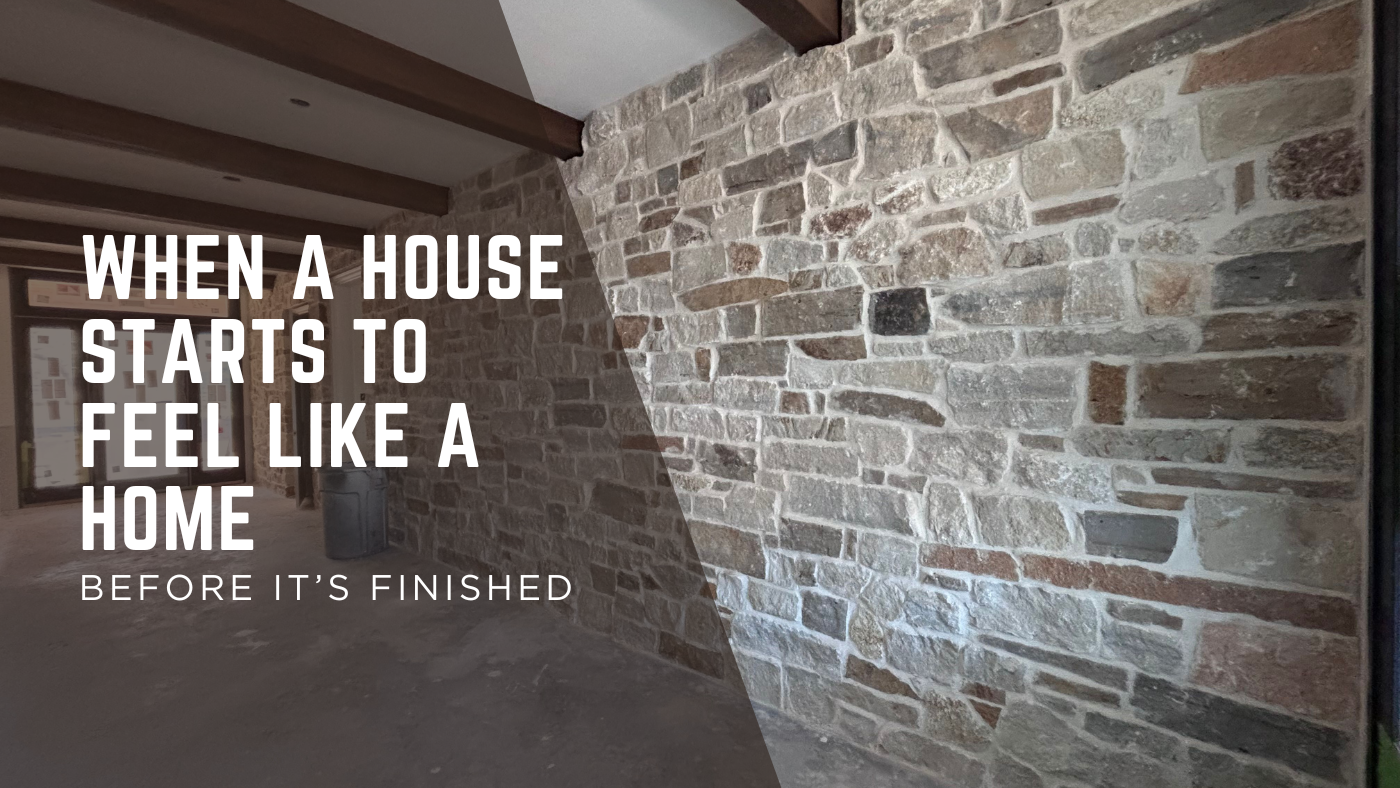
When a House Starts to Feel Like Home (Before It’s Finished)
There’s a moment in every custom home build when something shifts.
It’s not the final walkthrough.
It’s not when the furniture goes in.
And it’s definitely not when the last fixture is installed.
It happens earlier — when the house is still under construction.
You walk in, and while it’s technically still a job site, it no longer feels like one. The structure is there. The rooms are defined. The light is doing what it’s supposed to do. And for the first time, the home starts to feel… familiar.
For homeowners, it’s often the moment everything becomes real.
For builders, it’s one of the most important checkpoints in the entire process.
The In-Between Stage Most People Don’t Think About
Most people think of a home in two phases:
- Before construction
- After completion
But the most important phase lives right in the middle.
This is the stage before sheetrock goes up. Before finishes cover everything. Before the details are hidden behind paint, tile, and cabinetry.
It’s raw. Open. Honest.
And it’s where the home either works — or doesn’t.
At Fairmont Custom Homes, this is when we slow down.
We walk the space differently.
We look at things from angles most people wouldn’t think about.
We check details that won’t be visible later — but will absolutely be felt.
Why Light Matters More Than You Think
One of the biggest things we pay attention to during this phase is light.
Not just how much light a home gets — but how it moves.
Early morning light feels different than late afternoon light.
Shadows fall differently depending on the time of day.
Openings, windows, and even hallway proportions react to light in subtle ways.
That’s why we often walk homes later in the day, when the light is softer and more directional.
It reveals things.
- Slight inconsistencies in framing
- How a hallway pulls your eye forward
- Whether a space feels balanced or slightly off
- How connected (or disconnected) rooms feel
It’s not something you’d notice on a blueprint.
But it’s something you feel instantly in real life.
The Details You’ll Never See (But Always Feel)
A lot of what defines a well-built custom home is hidden.
Behind drywall.
Inside walls.
Above ceilings.
This includes:
- Framing alignment
- Blocking for future features (like shelving, beams, or custom installs)
- Mechanical layouts
- Structural decisions that affect how a space functions long-term
These are the things we double-check during site walks.
Because once sheetrock goes up, those opportunities are gone.
You can’t “fix it later” without undoing a lot of work.
So we make sure it’s right the first time.
When Homeowners Start to See It
This is usually the stage when homeowners pause.
Not because something is wrong — but because something finally clicks.
They’ll stand in a room a little longer than before.
Walk the same path twice.
Look out a window and imagine what mornings will feel like.
The kitchen island isn’t finished yet — but they stand where it will be.
The living room is still open framing — but they can already picture where people will gather.
It’s not about finishes at that point.
It’s about recognition.
The house starts to feel like theirs.
Why Layout Always Comes First
By the time a home reaches this stage, the most important decisions have already been made.
Not paint colors.
Not hardware.
Not décor.
But things like:
- Room proportions
- Ceiling heights
- Sight lines
- Flow between spaces
- How natural light interacts with each room
If those are right, everything else becomes easier.
If they’re off — no amount of high-end finishes can fix the feeling.
That’s why we spend so much time early in the process making sure the layout works not just on paper, but in real life.
What Makes a Custom Home Feel Different
People often walk into a custom home and say:
“I don’t know what it is, but this feels different.”
That “difference” usually comes from things they can’t immediately see.
- A hallway that feels intentional instead of like a pass-through
- A kitchen that naturally becomes a gathering space
- A bedroom that feels calm the moment you step into it
- A bathroom that just… works
These are the results of small decisions made early.
Decisions made during framing.
During walkthroughs.
During conversations on site.
Not after the home is finished.
The Builder’s Perspective
From our side, this stage is where everything comes together.
It’s where plans become physical.
Where ideas become measurable.
Where details either align — or need to be adjusted.
It’s also where experience matters most.
Because knowing what to look for isn’t always obvious.
It comes from:
- Walking hundreds of homes
- Seeing what works long-term
- Knowing which details matter — and which don’t
- Understanding how people actually live in the spaces we build
That’s what guides our process at Fairmont Custom Homes.
Before the Walls Go Up
There’s a reason we spend so much time here.
Before the walls go up.
Before everything is finished.
Before the details are hidden.
Because once that happens, the home starts to look complete.
But the real work — the part that makes it feel right — has already been done.
If you’ve ever walked into a home and immediately felt comfortable, calm, or connected to the space…
That didn’t happen by accident.
It started long before the paint went on the walls.
It started here.

Sorry, the comment form is closed at this time.